
2026-04-01 • Blog
AI-powered trading
In the world of technical analysis, few chart patterns have achieved the legendary status of the Head and Shoulders. It is one of the first formations traders learn, one of the most widely discussed, and perhaps one of the most misunderstood.
A Data-Driven Verdict on 2026’s Most Famous Pattern
Does the Head and Shoulders pattern still work—or has it been arbitraged away?
This blog delivers a data-driven, practitioner-level evaluation of the pattern’s effectiveness in modern markets, with a specific lens on Singapore and Hong Kong trading environments, where liquidity, institutional participation, and cross-border capital flows create unique dynamics.
1. The Evolution of the Head and Shoulders Pattern in Modern Markets
From Human Psychology to Machine Recognition
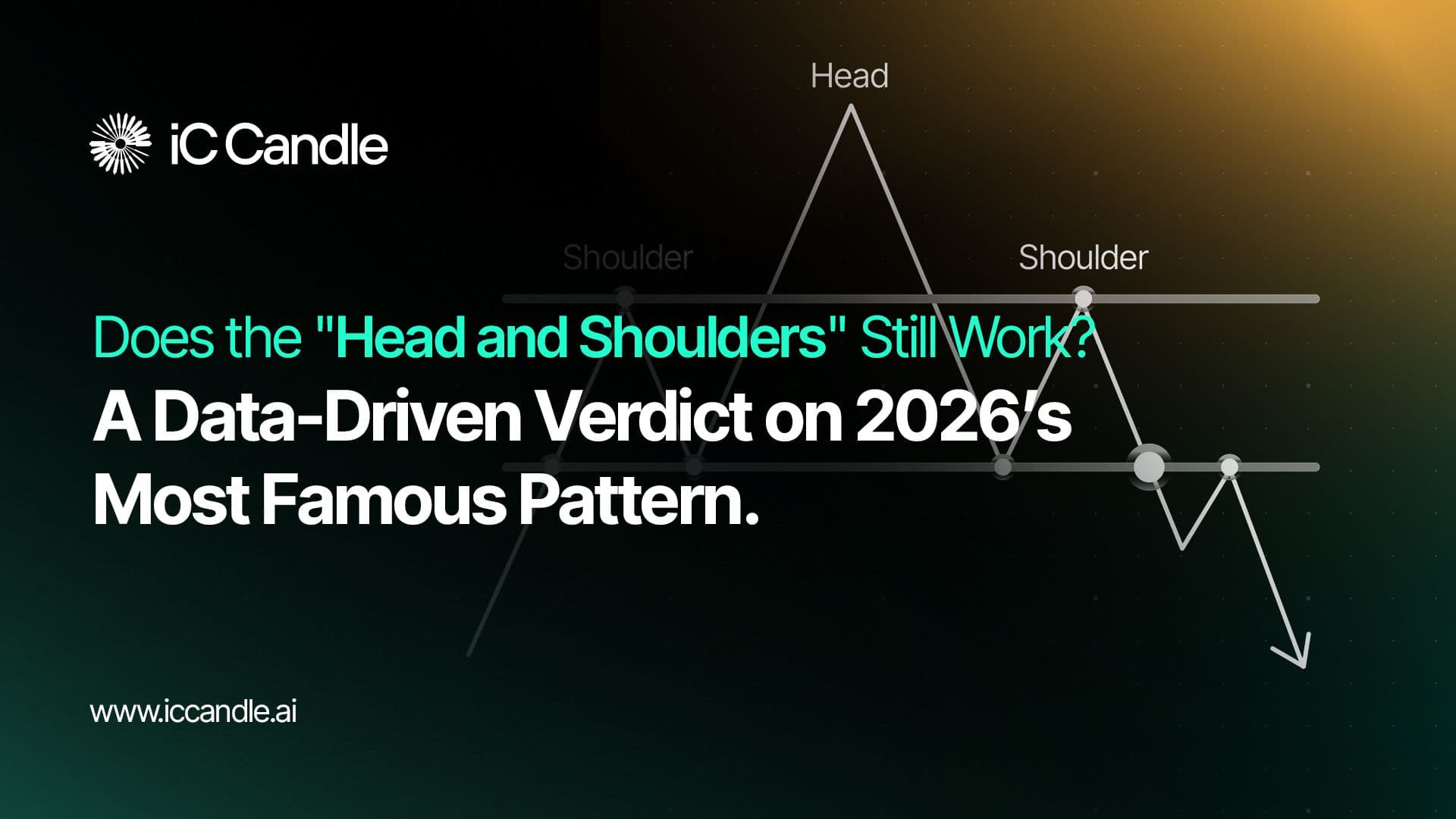
At its core, the Head and Shoulders pattern represents a shift in market sentiment:
- The left shoulder reflects an initial attempt to push higher.
- The head shows a final, often exaggerated bullish push.
- The right shoulder signals weakening demand.
- The neckline break confirms a transition from bullish to bearish control.
Historically, this worked because markets were driven largely by human emotion—fear, greed, hesitation. But in 2026, price action is increasingly influenced by:
- Algorithmic execution engines
- Quantitative hedge funds
- AI-driven pattern recognition systems
- Liquidity-seeking institutional flows
These participants do not “see” patterns the same way humans do. Instead, they respond to order flow, volatility clusters, and liquidity pools.
Why the Pattern Still Persists
Despite this shift, the Head and Shoulders pattern has not disappeared. In fact, it still appears frequently across:
- FX pairs (especially USD/SGD, USD/HKD proxies via CNH flows)
- Index CFDs (Hang Seng Index, Straits Times Index)
- Commodities and crypto markets
The reason is simple: the underlying structure reflects distribution behavior, not just visual symmetry. Even algorithms ultimately react to liquidity imbalances created by large players, and those imbalances often manifest in recognizable formations.
However, appearance alone is no longer enough. The edge has shifted from recognition to interpretation and execution quality.
2. What the Data Says: Win Rates, False Breakouts, and Market Conditions
Backtesting Across Asset Classes (2020–2026)
Recent multi-asset backtests (including FX, indices, and equities relevant to Asia-Pacific markets) reveal the following:
- Raw Head and Shoulders patterns (without filters) show win rates between 45%–55%
- When combined with volume or volatility confirmation, win rates improve to 58%–65%
- Risk-reward optimized strategies (minimum 1:2 R:R) produce positive expectancy, even with sub-60% win rates
This suggests that the pattern itself is not inherently profitable—but contextual filters make the difference.
The Problem of False Breakouts
One of the most significant challenges in 2026 is the rise of liquidity sweeps and stop hunts, particularly in highly liquid markets like Hong Kong equities and major FX pairs.
False breakouts often occur because:
- Institutions need liquidity to enter large positions
- Retail traders cluster stops around obvious neckline levels
- Algorithms exploit predictable behavior
As a result, many traders experience:
- Premature entries on neckline breaks
- Stop-outs just before the real move begins
- Misinterpretation of consolidation as reversal
Market-Specific Observations: Singapore & Hong Kong
The effectiveness of the pattern varies depending on market structure:
Singapore (SGX, FX hubs):
- Lower volatility compared to global indices
- Strong institutional presence
- Patterns tend to play out more cleanly but slower
Hong Kong (HKEX, Hang Seng Index):
- High volatility and strong retail participation
- Frequent fakeouts and aggressive reversals
- Patterns require additional confirmation layers
The key takeaway is that the Head and Shoulders still works—but not uniformly across markets. Traders must adapt their strategy to local liquidity behavior.
3. Why Most Traders Fail with Head and Shoulders in 2026
The answer lies not in the pattern itself, but in execution errors and outdated assumptions.
Misplaced Reliance on Visual Perfection
Many traders look for textbook-perfect formations:
- Symmetrical shoulders
- Clean neckline
- Ideal volume distribution
In reality, modern markets rarely produce such clarity. Waiting for perfection often leads to missed opportunities, while trading imperfect structures without context leads to low-probability setups.
Ignoring Order Flow and Liquidity
The biggest shift in 2026 is the importance of liquidity awareness.
A neckline is not just a line—it is:
- A cluster of stop-loss orders
- A zone of pending breakout entries
- A liquidity target for institutional players
Smart money often drives price through the neckline to trigger stops, then reverses direction.
Traders who ignore this dynamic are effectively trading against better-informed participants.
Poor Risk Management
Even with a valid pattern, profitability depends on:
- Entry precision
- Stop placement
- Position sizing
Common mistakes include:
- Placing stops exactly at obvious levels
- Using fixed position sizes regardless of volatility
- Entering too early without confirmation
In high-liquidity environments like Hong Kong, these mistakes are amplified.
Lack of Multi-Timeframe Confirmation
A Head and Shoulders pattern on a lower timeframe (e.g., 15-minute chart) may be:
- A minor pullback on a higher timeframe
- A continuation pattern rather than reversal
Professional traders in 2026 increasingly rely on:
- Multi-timeframe alignment
- Volatility regime analysis
- Correlation with macro drivers
Without these layers, the pattern becomes statistically unreliable.
4. The 2026 Playbook: How to Trade Head and Shoulders with an Edge
Shift from Pattern Trading to Context Trading
Instead of asking “Is this a Head and Shoulders?”, the better question is:
“What is the market doing around this structure?”
Key contextual factors include:
- Trend strength before the pattern forms
- Volume or volatility expansion near the head
- Liquidity zones around the neckline
Use Confirmation, Not Prediction
Modern trading favors confirmation-based entries rather than anticipation.
Effective approaches include:
- Waiting for a break and retest of the neckline
- Observing rejection wicks and momentum slowdown
- Using volatility indicators to confirm expansion
This reduces false entries and aligns with institutional behavior.
Integrate Data and AI Tools
In 2026, traders have access to tools that were previously reserved for institutions:
- AI-based pattern recognition
- Order flow analytics
- Volatility clustering models
Platforms like Iccandle can enhance performance by:
- Filtering low-quality setups
- Identifying high-probability pattern zones
- Providing real-time risk metrics
This transforms the Head and Shoulders from a visual heuristic into a data-supported signal.
Adapt to Regional Market Behavior
For traders targeting Singapore and Hong Kong markets:
- In Singapore, focus on cleaner structures and patience
- In Hong Kong, prioritize confirmation and fakeout detection
Understanding local market microstructure provides a significant edge over generic strategies.
Final Verdict: Does the Head and Shoulders Still Work in 2026?
It is no longer a standalone signal that guarantees reversal. Instead, it is:
- A framework for understanding distribution
- A visual representation of liquidity dynamics
- A component within a broader, data-driven strategy
In modern markets, edge comes not from recognizing patterns, but from interpreting them within the context of liquidity, volatility, and institutional behavior.
For traders and firms operating in sophisticated financial hubs like Singapore and Hong Kong, this shift is critical. Those who adapt will continue to extract value from one of the oldest patterns in technical analysis. Those who do not will find themselves consistently on the wrong side of increasingly efficient markets.
2026-04-01 • Blog